
Wall Street has long believed Tesla's electric-truck strategy could be a winner, and the reasoning still shapes how the industry thinks about heavy-duty electrification.
The argument starts with a simple premise: electric trucks will be more competitive and capture a higher share of the truck market than most expect.
By the mid-2020s, analysts projected that 10 percent of U.S. trucks in the heaviest Class 8 weight segment, and 15 percent of trucks in the lighter Class 5 through 7 segments, could be fully electric, said Rod Lache, an analyst at Deutsche Bank. Lache based that assessment on an analysis of initial cost, operating cost, weight, range and use cases.
He estimated electric trucks would debut with a payback period of roughly 2.9 years, declining toward two years.
"This would move into the sweet spot of fleet owners' preferred 18-24 month payback period," Lache wrote. "Short driving range (200-300 miles) is likely to be a constraint. But we'd note that 20 percent of U.S. Class 8 trucks today drive less than 200 miles per day; and many use cases are well suited for charging/battery swap."
Why The Economics Could Work
Tesla can tap its high-volume, automated manufacturing of electric motors and battery packs to produce truck components at scale. Class 8 trucks priced lower than the market expects, analysts argued, would be disruptive on their own.
For context, North American Class 8 orders over a twelve-month span totaled roughly 231,000 units, according to FTR Intelligence, a trucking-industry research firm. Even a single-digit share of that market represents billions in annual sales.
Morgan Stanley analysts Ravi Shanker and Adam Jonas were also bullish:
"We believe Tesla's reveal of its autonomous, electric Class 8 semi-truck could be one of the biggest catalysts in trucking in decades and potentially set off separation between the technology leaders and the laggards among carriers, shippers, truck manufacturers and suppliers."
They expected battery costs to potentially be handled separately in a lease arrangement, possibly as a per-mile charge, and estimated that an autonomous-electric truck could be up to 70 percent cheaper to operate than a conventional truck.
The Self-Driving Angle
Lache also expected significant self-driving capability:
"Tesla's leadership in AI/autonomous driving could also represent a significant advantage in the eyes of fleet operators. We believe that autonomous vehicles will be deployed sooner than expected."
Even driverless designs would have to comply with Federal Motor Vehicle Safety Standards, which means they must still have steering wheels, brakes and other control components.
The Competition Is Already Building
Tesla won't have the lane to itself. Established manufacturers are moving fast:
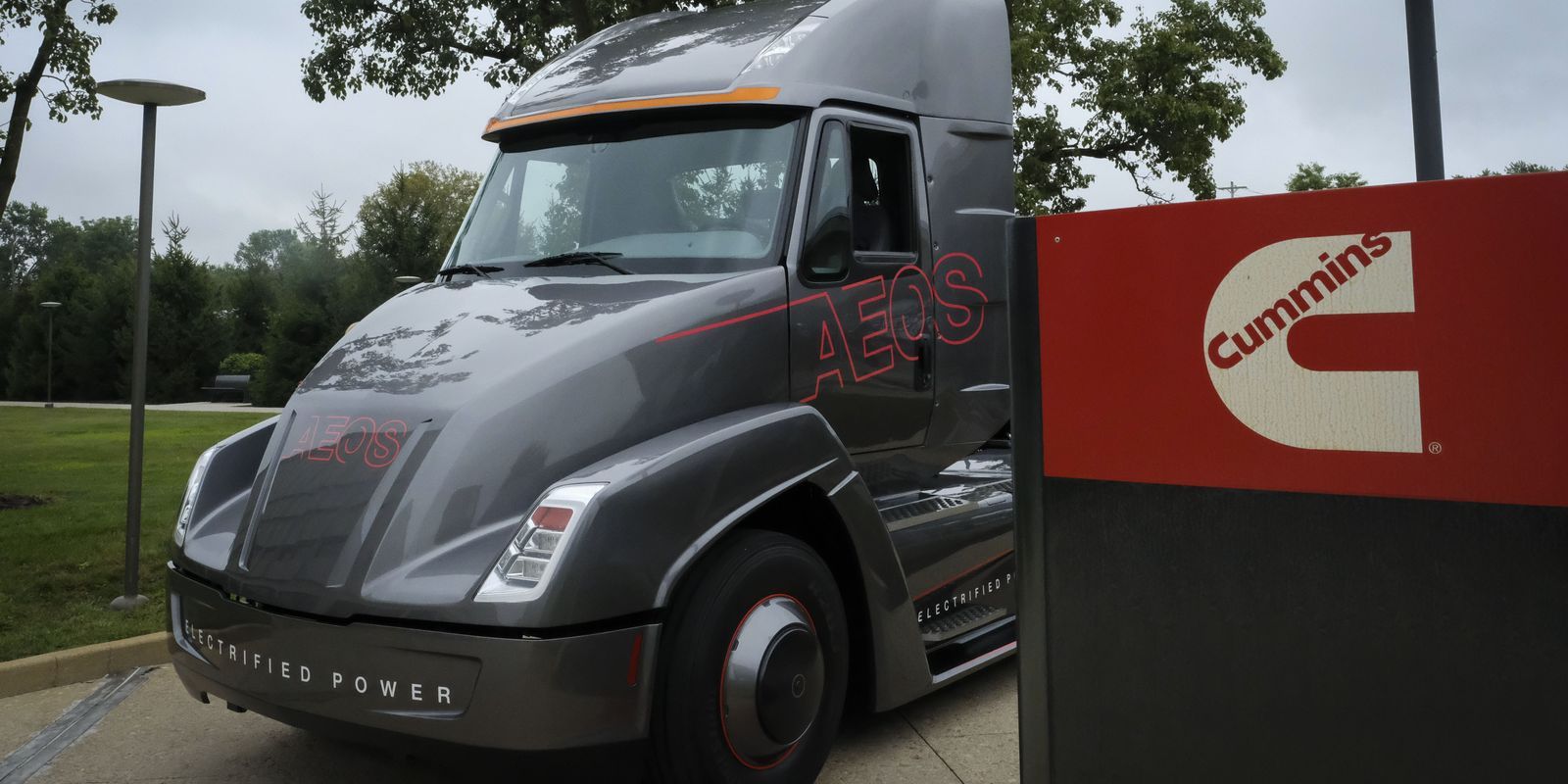
- Cummins Inc., a giant in heavy-duty diesel, unveiled an electric drive system with an option for a clean diesel range-extending generator.
- Toyota unveiled a working fuel-cell electric Class 8 drayage truck tested at the Port of Los Angeles.
- Daimler (Freightliner, Fuso) planned an all-electric Urban E-Truck capable of hauling up to 26 metric tons.
- Fuso planned a production all-electric urban delivery truck, the medium-duty eCanter, for the U.S. market.
The Hard Problems
For electric trucks to win mainstream haulers, the industry will have to solve real issues: long charging times compared with a quick diesel refuel, the weight of the battery pack cutting into payload, and long-haul ranges of 600 to 700 miles. Battery swapping or flash charging are among the proposed solutions.
Even so, the number of electric-truck doubters keeps shrinking.
"Just to be pretty direct on this, we believe that there will be electric trucks on the road," said Troy Clarke, then chief executive of truck builder Navistar International Corp.
He noted that the determining factors for which vehicles get purchased will be packaging and range between charges, and that there is a significant market for trucks that travel 200 miles or less a day, the early sweet spot for electric technology.
Likely early launch partners named by analysts included large carriers and shippers such as Schneider National, US Xpress, XPO Logistics, FedEx and Ryder, all of which had expressed interest in alternative-technology trucks.
Source: Trucks.com
Move freight smarter with Doft
Thousands of loads, instant matching, and fast carrier pay — all in one place.
Sign up free