
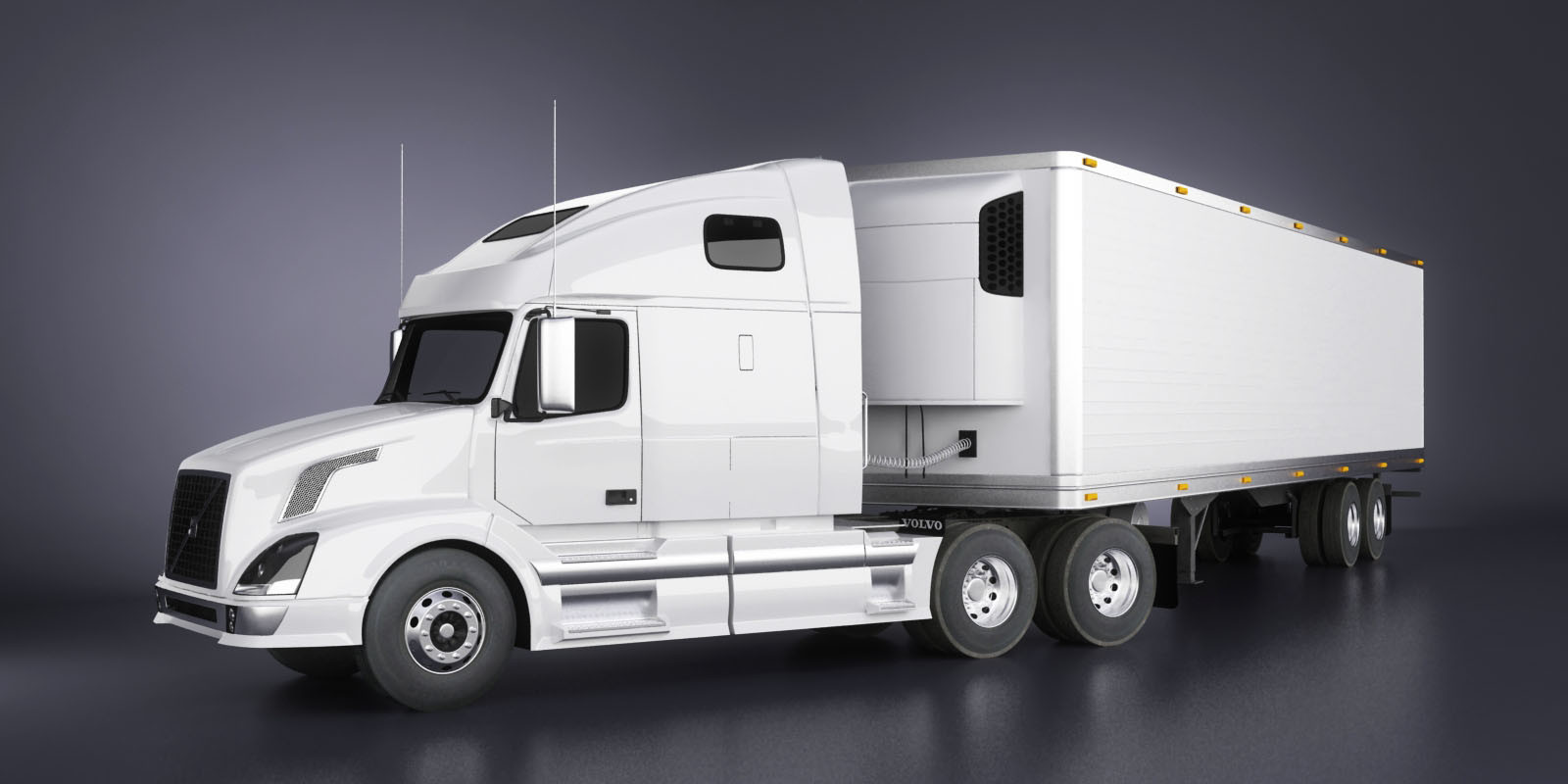
The future of trucking and transportation comes down to three main elements: connectivity, electromobility and automation. Each is evolving on its own, but the real shift comes when the three converge.
That's the view of Volvo Group Chief Technology Officer Lars Stenqvist, who laid out the case in a roundtable discussion with media.
These technologies, he argued, will benefit companies through efficiency and benefit society through improved safety, reduced traffic and better urban design.
"We need to come up with these solutions rapidly," Stenqvist said. "When we meet customers, they are waiting for it. When we meet legislators, they are waiting for it. I would say society's waiting for it."
1. The Connected Supply Chain
Connectivity is one of the biggest areas in flux. All parts of the supply chain, shippers, manufacturers, retailers, distributors and transport companies, are moving into an age of data dependency fueled by sensors, the Internet of Things and cloud-based applications.
That connectivity lets trucking companies streamline operations, drive efficiencies and better schedule maintenance, with cargo connected in real time to optimize the logistics chain.
Most large carriers already use some level of connectivity. Electronic logging devices, for instance, track how much time drivers spend behind the wheel; the ELDs are meant to ensure compliance, but they also create efficiencies. Connectivity is even reaching truck parts: tire makers have begun embedding RFID tags into commercial tires and retreads to help track tires throughout their lifecycle.
"We're already there in different stages of connectivity," said Satish Jindel, president of SJ Consulting Group. "It's just that some companies are using it more extensively than others."
2. Efficiency Through Electromobility
The move toward hybrid and electric vehicles is gaining steam, Stenqvist said, but he dispelled the notion that internal combustion engines are nearing extinction. They will be around "for years to come."
His view: keep optimizing combustion engines, advances in aerodynamics, transmissions and piston designs can reduce fuel consumption by as much as 2 percent, while building out more hybrid and electric vehicles.
Zero-emissions vehicles also open new urban possibilities. Because they make no noise, they can use indoor bus stops, which changes how cities can be designed.
Jindel offered a reality check: while electric engines are getting more powerful, they're a long way from fully powering Class 8 trucks. Pulling a 30,000-pound load up a hill could be "very painful." But the technology is very useful in medium- and light-duty applications inside city centers, Stenqvist said, and regional and long-haul routes are best suited for hybrid models that can use regenerative braking.
"We see the biggest interest is to have the ability to go electric on the last leg, or the last mile. Most likely, that will be the most popular application," Stenqvist said.
3. The Road To Automation
The most advanced, and most distant, technology in this paradigm is automation and self-driving vehicles. There will be multiple levels of automation on the path to driverless trucks.
Many building blocks, such as cruise control and lane-departure sensors, are already on the market. The next levels move toward greater autonomy, where less is required of the driver. The key, Stenqvist said, is to start small with confined uses that reduce risk, for example, a self-driving truck operating in a controlled environment like an ore mine, or a pre-programmed refuse truck that creeps from bin to bin while the driver walks ahead, with sensors stopping it whenever an obstacle appears.
"It's a research project where we are testing the boundaries," Stenqvist said.
What It Takes To Get There
New technology alone won't drive mass adoption, Jindel cautioned. While bigger carriers are eager to pilot projects, many owner-operators won't have the short-term financial wherewithal to upgrade without incentives, for example, lower insurance premiums for trucks with driver-monitoring sensors.
Stenqvist's clear view of the destination: experimentation, collaboration and partnership to create a "connected smart infrastructure" that goes beyond individual vehicles, producing a transport system with higher capacity, less congestion, fewer accidents and less environmental impact.
Source: Trucks.com
Move freight smarter with Doft
Thousands of loads, instant matching, and fast carrier pay — all in one place.
Sign up free