
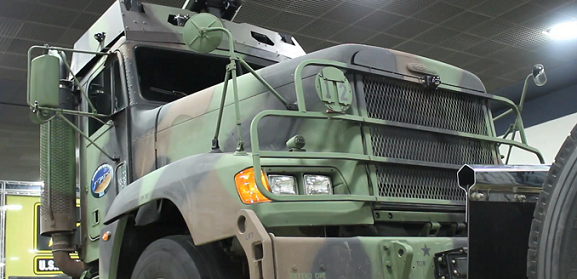
Heavy-duty trucks that can handle long highway stretches without a driver actively steering may be closer than many expect - but they will arrive in pieces, not overnight. That was the consensus among industry experts mapping out how self-driving trucks will integrate with the existing fleet.
It Comes in Pieces
"A lot of the technology is driver assist or safety enhancement," said Max Fuller, executive chairman of U.S. Xpress, one of the largest trucking companies in the country. "If you look at autonomous vehicles, it will come in pieces."
For large carriers, the appeal is straightforward: enhance safety, make drivers more productive, improve service for customers, and generate a better return. Fuller anticipated Level 4 autonomous capability within a few years. NHTSA defines a Level 4 vehicle as one that can drive itself in most situations, with exceptions - such as severe weather or construction - where a human may need to take control.
A Measured Approach
Not everyone in the industry shares the same timeline. Daimler Trucks North America has tested self-driving trucks while taking a measured approach.
"There are real edge cases to solve," explained Derek Rotz, director of advanced engineering for Daimler. Detecting road debris and correctly reading poor lane markings remain challenges. "What happens if a steer tire blows out? Humans are very good at intuitively assessing a situation and responding. Computers need to have all that lined up for them, all those edge cases."
Complementary to Drivers
Developers have framed the technology as complementary to drivers rather than a replacement.
"We see our technology as complementary to drivers," said Alden Woodrow, then product lead for self-driving trucks at Uber's Advanced Technologies Group. "We have a much more optimistic view about the implications for driver livelihoods, employment and productivity."
Truck manufacturers such as Volvo Group have demonstrated heavy vehicles at various levels of autonomy, including a self-steering tractor and a fully autonomous mining truck. The strongest business case, they argue, is for repetitive, point-to-point routes - or hazardous environments where removing a human from harm's way is a clear win.
"There's a value proposition for every level of automation," said Dr. Aravind Kailas of Volvo Group North America - whether that is a fully driverless vehicle in a controlled setting or a conventional truck with a single safety feature like automatic emergency braking.
Safety and Regulation Lead the Way
Adoption hinges on safety and clear rules. "If trucking companies don't believe it will be safe, they won't buy it," said Michael Cammisa of the American Trucking Associations. The industry continues to await guidance from federal and state regulators, and flexibility for innovation will be key.
Carriers also evaluate the numbers carefully. Fuller noted that U.S. Xpress looks for payback in 18 to 24 months, and that trucks are typically traded before they reach 500,000 miles - roughly three to four years. As today's trucks retire, the vehicles replacing them are likely to do far more of the driving themselves.
"Our No. 1 goal is to create jobs that people want," Fuller said, "and that's the reason we need products that make the job a lot simpler for drivers."
Move freight smarter with Doft
Thousands of loads, instant matching, and fast carrier pay — all in one place.
Sign up free