
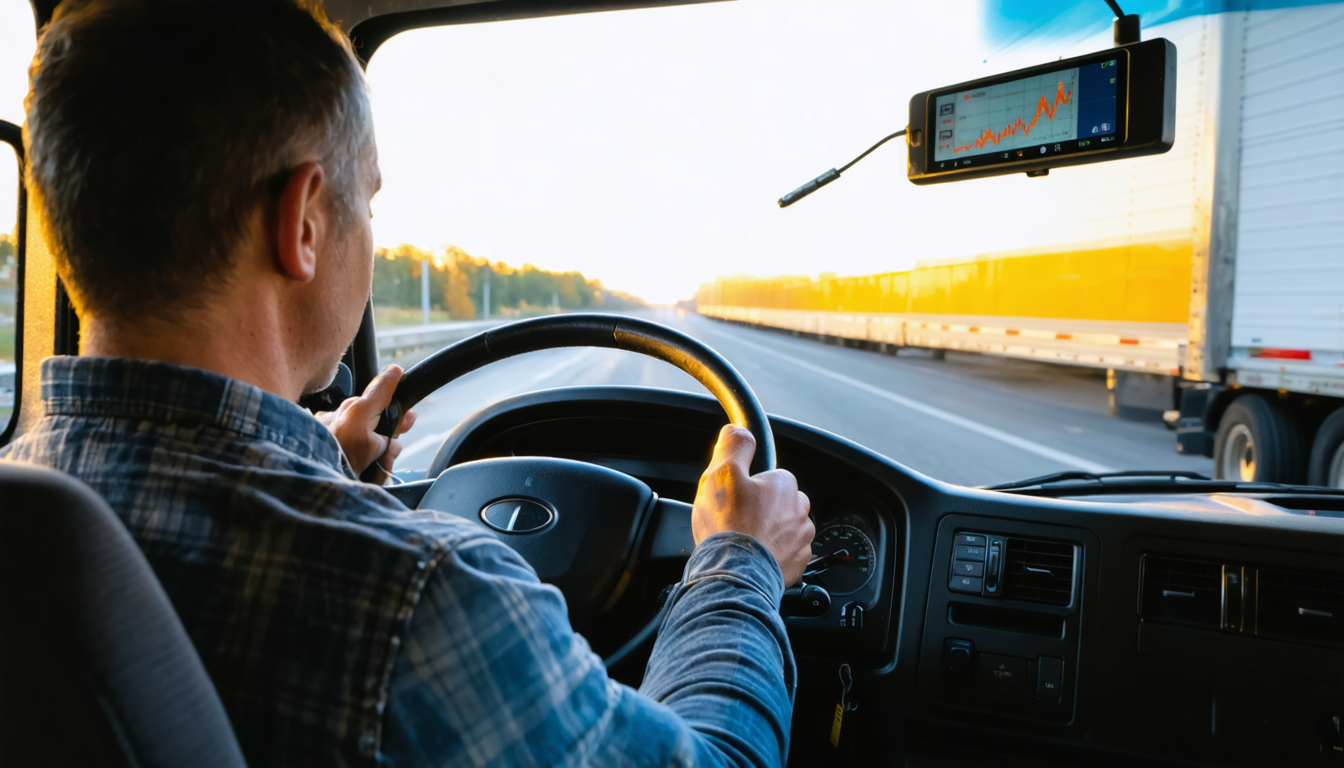
Insurance costs are eating into owner-operator margins like never before. Liability premiums, cargo coverage, bobtail—they all add up fast, especially when capacity is tight and rates don't always cover the squeeze. But a shift is happening: insurers are now offering real discounts to carriers who install camera systems and telematics. The trade-off? Your driving is being recorded and analyzed. Understanding how this works—and what your obligations are—matters for your bottom line and your peace of mind.
Why Insurers Love Camera Data
Dash cams and onboard telematics (GPS, acceleration, braking, lane drift) give insurers a clearer picture of risk. A driver with clean footage and smooth acceleration patterns looks safer on paper than one without any data at all. Carriers using these systems have reported fewer false claims, faster settlement, and discounts ranging from 5% to 15% on liability premiums, depending on the insurer and your safety record.
Companies like Dohrn and Samsara are actively marketing these systems to fleets, and major insurers—Progressive, Nationwide, AIG—are now building telematics into their underwriting models. The logic is simple: data reduces uncertainty, and reduced uncertainty means lower risk, which means lower premiums.
What the Data Actually Captures
A typical fleet camera system records video from forward-facing and sometimes inward-facing lenses. Telematics track speed, harsh braking, rapid acceleration, lane departures, and idle time. Most systems are cloud-connected and send alerts in real time if the system detects a risky event—say, aggressive cornering or hard braking.
This data is used for three main purposes:
- Claims defense. If you're in an accident, footage can prove you weren't at fault—or prove you were, which matters for your CSA score and future rates.
- Driver coaching. Insurers and fleet managers use the data to identify risky habits and suggest retraining.
- Premium calculation. Your renewal rate may be adjusted up or down based on your actual driving record, not just your claims history.
The catch: this data can also be subpoenaed in a lawsuit or used against you if you're deemed at fault.
The Privacy & Legal Gray Zone
As an owner-operator, you own your truck—but if you're leased to a carrier or using a factoring company that requires telematics, the terms may give them (and their insurer) access to your data. Read your lease or factoring agreement carefully. Some allow you to opt out; others make it mandatory.
Inward-facing cameras (those pointed at the driver) are more contentious. Some states have restrictions on recording inside a vehicle without consent. If you're an independent owner-op and you install a camera yourself, you generally have more control. If your carrier mandates it, you may have less choice.
The FMCSA doesn't currently regulate telematics or mandate them, but they do allow carriers and insurers to use the data for safety audits and CSA compliance. If you're flagged for a roadside inspection and your telematics show a pattern of speeding or HOS violations, that becomes part of your record.
How to Evaluate a Camera System
If you're considering installing telematics or switching insurers that offer a discount for it, ask:
- What data is stored and for how long? Most systems keep 30 to 90 days of continuous video; older footage is overwritten.
- Who has access? You, your carrier, your insurer, and potentially law enforcement in the event of an accident or investigation.
- What's the discount? Is it 5% or 15%? How long does it last? Will your rate go up if you have a safety event?
- Can you opt out? If you're independent, yes—but it may cost you in higher premiums. If you're leased, check your agreement.
- What about privacy? Confirm whether inward-facing video is stored and who can view it.
The Bottom Line for Your Wallet
Camera systems typically cost $500 to $2,000 installed, depending on the system. If a telematics discount saves you $1,500 to $3,000 per year on insurance, the system pays for itself in under a year—and keeps paying after that.
But the real value isn't just the discount. Clean camera footage can save you thousands in a liability claim. If you're involved in an accident and your footage proves you weren't at fault, you avoid a rate spike that could cost you far more than the system ever saved you.
The risk is that the data can also be used against you. If you're speeding, tailgating, or running HOS violations, the footage is now evidence. Some owner-ops see this as fair accountability; others see it as invasive. Either way, it's worth understanding the terms before you sign on.
If you're shopping for insurance or considering a lease with a carrier that mandates telematics, get the details in writing. Ask your broker or insurer for a clear breakdown of what the discount is, how the data is used, and what your privacy rights are. And if you're already running a camera system, review your footage occasionally—not to police yourself, but to understand what your insurer and carrier are seeing.
Move freight smarter with Doft
Thousands of loads, instant matching, and fast carrier pay — all in one place.
Sign up free