
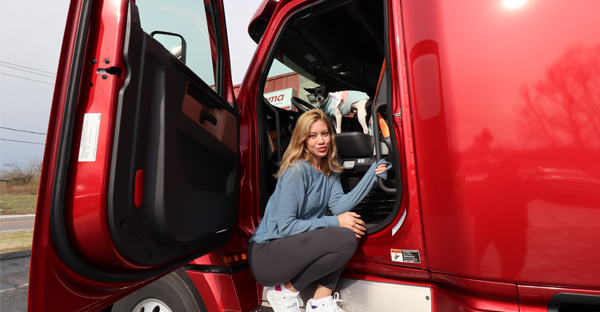
The trucking industry faces an ongoing driver shortage, and companies are increasingly looking to hire people who may not have been able to thrive in the industry before. Building a more inclusive workforce is one of the most promising ways to close that gap.
In trucking and logistics, men make up roughly 85% of the workforce. According to the American Trucking Association, only about 7.8% of professional truck drivers in the U.S. are women, yet research has found that women make up about a third of the "warm leads" who say they might consider a job in trucking.
There are many benefits to hiring more women drivers. On average, female drivers tend to be more cautious, leading to fewer and less severe accidents. They also speed less, resulting in fewer tickets, fewer legal cases, and lower insurance premiums for carriers. Studies suggest women tend to be gentler with equipment, which can mean lower maintenance costs and longer equipment life.
Many factors keep women from excelling behind the wheel, including outdated assumptions about the industry, societal expectations, a lack of childcare options, and harassment. Carriers can tackle these barriers head-on by challenging a toxic workplace culture, providing real benefits for parents, and educating future generations.
Educate Your Employees
Concerns about harassment and assault are real for women on the job. Some industry leaders are taking action. Sharae Moore, founder of S.H.E. Trucking, started a community and licensing program to help women entering the industry avoid companies known for tolerating misconduct.
Gary Hollands, owner of Interstate Trucking Academy, works to combat misconduct by adding self-defense lessons and harassment-response training to his free program. He believes it's important to prepare female drivers for the realities of the industry and give them the tools to navigate difficult situations safely.
The industry needs more leaders who acknowledge the problem and work to change a dangerous culture, rather than fall back on "that's just how it is."
Provide Childcare Solutions
Many parents, mothers in particular, still carry most childcare responsibilities, and the long hours of the trucking lifestyle can be tough to juggle while raising children. Carriers can help with adequate benefits for primary caregivers, such as paid parental leave, flexible hours that fit the school day, and affordable daycare options.
Support From Nonprofits and Initiatives
There are many creative ways to bring women into the freight industry. Some nonprofits build awareness early, creating materials that teach younger generations about supply-chain careers. Others focus on convincing managers to hire women. Ellen Voie, CEO of Women in Trucking, has spent years working with recruiters, trucking-school operators, and drivers to encourage training and hiring more women.
Additional initiatives include programs and trade groups in certain states that fund free certification for female drivers, and companies that promote husband-and-wife driving teams to ease long hours and time away from home. These efforts are working: the number of female truck drivers on the road has risen notably in recent years.
The future of the industry and a real solution to driver shortages hinge on the ability to attract and support more women. By educating workers, questioning the status quo, and providing benefits that let people thrive, the freight industry has a genuine chance to close the gap and strengthen its workforce.
Move freight smarter with Doft
Thousands of loads, instant matching, and fast carrier pay — all in one place.
Sign up free