
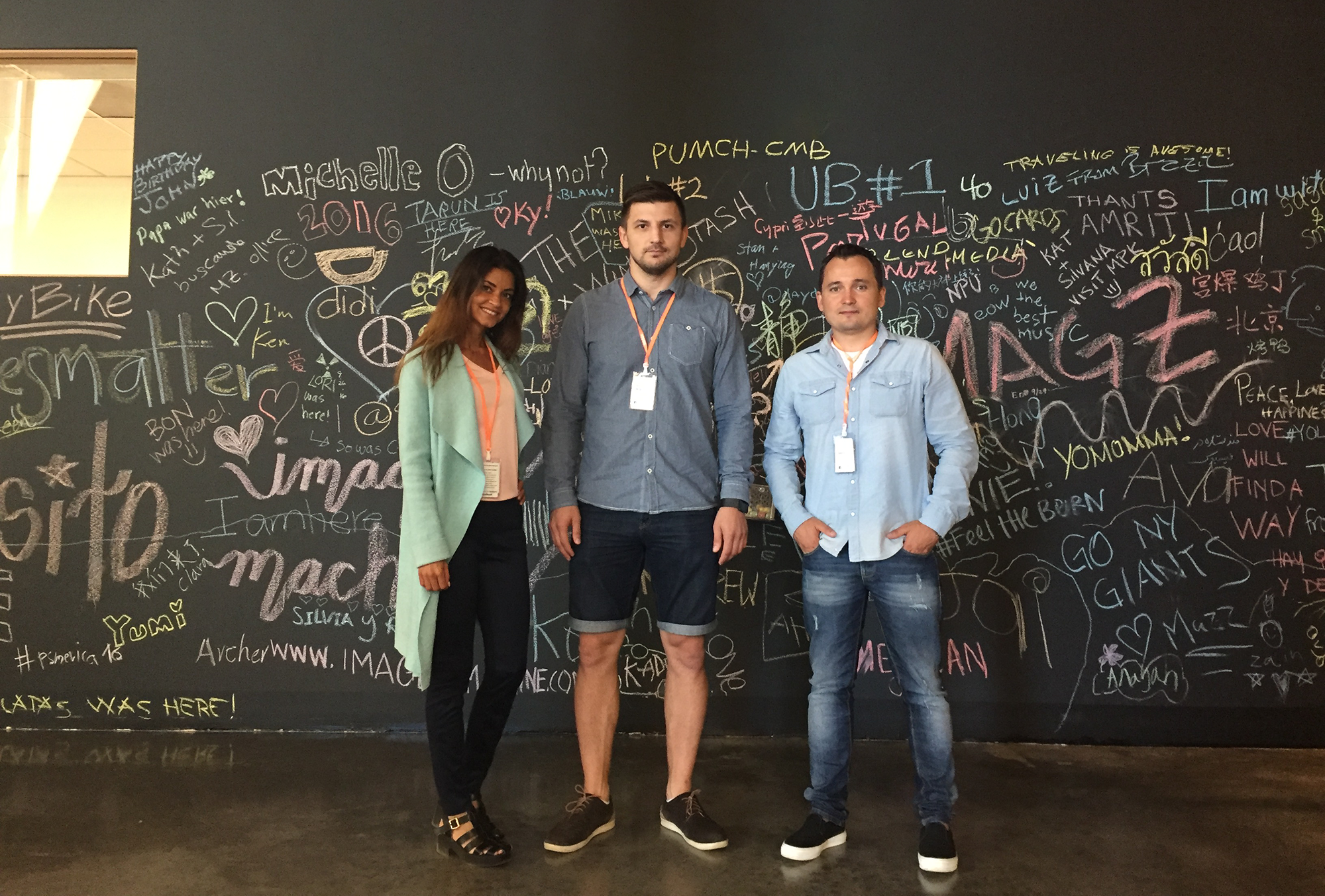
Don't be afraid to make mistakes — they will make you stronger. Mistakes are part of the business experience. That's absolutely normal.
As part of a series called "5 Things I Wish Someone Told Me Before I Began Leading My Company," Dmitri Fedorchenko, CEO and co-founder of Doft, shares the lessons behind building an on-demand freight-matching marketplace.
The backstory
In the early 2000s I moved from Gomel to Minsk to study at BSUIR (Belarussian State University of Informatics and Radioelectronics), where I studied programming. I had been writing my first programs — text processors and algorithmic problems — since the sixth grade, and I was a repeat winner of computer-science Olympiads. At university I earned a Master of Science in information technology and software development, and there I met my friend and current business partner, Sergey Zaturanov.
Sergey and I started doing business together in 2008, working on several ventures including software outsourcing, e-ticketing software, and a mobile GPS navigation app. Today we are building Doft — an on-demand digital freight-matching marketplace connecting direct shippers and truck drivers.
The "aha" moment
While visiting friends in Chicago, we met a small family-owned trucking business in Illinois. They were owner-operators: the wife dispatched, the husband drove, and every day they struggled to find loads for their truck. That was our aha moment. We realized finding loads was enormously time-consuming, and that a modern digital freight-matching solution could spare drivers a full day of searching. At the time, the only options were old load boards where brokers posted freight — there was no Uber-like app to find loads in a few clicks. That became our challenge.
On hard times
Tough times are an integral part of an entrepreneur's life, and there are very few moments when you get to celebrate. But I never thought of giving up — that is the main rule of success in any business. I found inspiration in travel: a change of scenery, time in nature, and reflection.
The biggest hurdle early on is money. A close circle helped me — parents, relatives, and friends. I explained my ideas, how their support would be used, and when I would pay it back. It was harder than I expected, and it took me ten years to repay what I had borrowed. But I was lucky to have natural motivation and curiosity, and the encouragement of family made a real difference.
What makes the company stand out
We built Doft from scratch and grew it through organic, sustainable development. We chose that path because we wanted to keep control of the company and prove that a focused, self-made team can build something that lasts. We wear that approach as a badge of honor.
The funniest early mistake
We once celebrated our 1,000th registered user — popped a bottle of champagne and had fun — only to find out it was our own internal testing and there was nothing to celebrate yet. The lesson: don't celebrate too early.
The deeper mistake young founders make is believing everything will go according to plan. There is a lack of awareness of the risks and pitfalls. Software that you think will take two months can take two years, and if that delay is not in your plan, it is painful. The development of your business never goes exactly as planned — it is always unpredictable.
Advice I wish I hadn't followed
Don't get distracted by side projects that are supposed to help your main project. When we were starting Doft, influential people in US trucking invited us to join a related but separate venture. We spent months on terms, roles, and software, and after six to eight months we realized marketing the new product would consume almost all of our time. We closed it. Whatever you call it — a side project or a side hustle — it will take a significant share of your time and energy. Give the decision the consideration it deserves.
Three traits most instrumental to success
- Persistence. Many entrepreneurs hit setbacks constantly, especially at the beginning. When something doesn't work, you start over. My dad told me failure is a stepping stone to success, and I agree. Treat setbacks as experience, not as reasons to stop.
- Passion. Successful people are committed, and that energy spreads to those around them. You will work very hard, often for little money and with no guarantee it will work — so you need intrinsic motivation, not motivation tied to money.
- Focus. Focus is the "north star" you keep in front of you. Step back occasionally and notice when you start to lose it. Focus on making one great product instead of ten good ones.
Avoiding burnout
Slow down your sense of time. Remember how long the days felt as a child, because you were always learning something new? Learning new things — and protecting a real balance between work and rest — slows time down again. Turn off the computer, spend time with friends and family, walk, exercise, take a vacation. A healthy body supports a healthy mind.
The most common founder mistakes
Many founders refuse to scale when they should, insisting on doing everything themselves. Founders are used to doing it all, and when the team grows it is hard to let go — "nobody can do it as well as I can" is the most common excuse. But if you hold onto everything, you will never scale. At some point a founder has to shift from doing to mentoring: give people direction and feedback instead of doing their jobs, and accept that things won't be done exactly as you would do them.
The most underestimated part of running a company
Time to market — how long it takes to build a product and launch it. It always seems it will be faster, but it often takes far longer. Launch your minimum viable product as early as possible. Your idea may be brilliant, but to achieve the result you want, you have to beat your competition to the market.
5 things I wish someone told me
- Start as early as possible. The more time you spend as an entrepreneur, the better your long-term returns — even if it takes a few tries. The younger you are, the more risk you can tolerate and the faster you can recover from losses.
- Don't be afraid to make mistakes. The founder who makes many mistakes but learns from each one will accomplish far more than the one who avoids mistakes entirely.
- Lack of money is not an excuse. Most of what an early entrepreneur does is not tied to how much money is in the bank — it is tied to how hard you are willing to work and how much focus you can bring. You can start small.
- Find a good business partner you can rely on. No one is an expert at every part of a business. A good partner keeps you going when times are hard. Most startups begin with one or two partners — don't be the exception.
- Start selling as early as possible. Test your business model at the earliest stage. Early sales tell you what customers like, what they don't, and what to build next — and you will iterate several times before you are ready to scale.
A movement worth starting
If I could start a movement, it would be around cleaning up our environment — something as simple as plogging, picking up litter near where you live. The most rewarding thing I can do is support charitable projects that help people and the planet. There is a social mission behind almost every project I work on, and I would like to see more social projects at the intersection of technology and ecology.
Source: Authority Magazine, Thrive Global.
Move freight smarter with Doft
Thousands of loads, instant matching, and fast carrier pay — all in one place.
Sign up free