
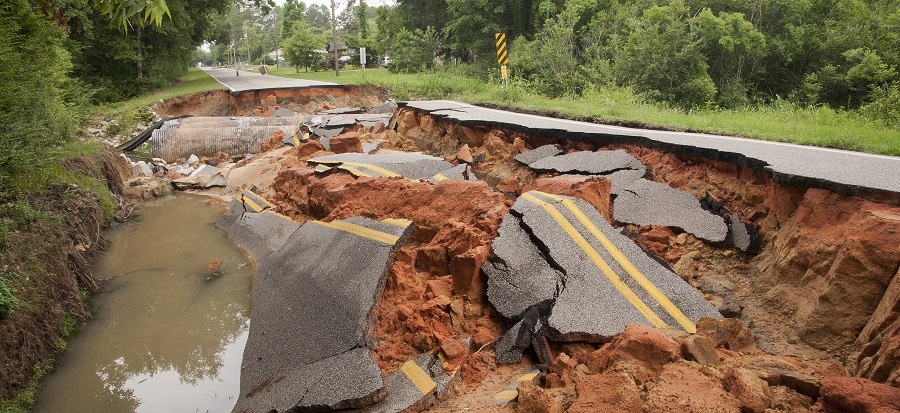
America's infrastructure suffers from a serious funding gap, and for the trucking industry that gap shows up every day in slow freight, deteriorating bridges and roads that cost carriers time and money.
Infrastructure is usually an issue with broad bipartisan appeal. Even a casual observer can see that the highways and bridges that form the backbone of the freight economy badly need repair. This didn't happen overnight. Basic maintenance on many transportation facilities has been deferred, often for decades, and every year a critical repair or capacity project is delayed, it costs the economy dearly.
The scale of the problem
The gap between U.S. infrastructure needs and current funding has often been pegged at roughly $2 trillion. The American Society of Civil Engineers has estimated that an investment gap of this size would cause substantial losses to GDP, business sales and jobs over time, and its report card has repeatedly given U.S. transportation infrastructure failing or near-failing grades, with phrases like "strong risk of failure" and "significant deterioration."
Why the gas tax alone can't fix it
Motor fuel taxes have long been the main source of funding for transportation infrastructure, but they are increasingly antiquated.
"We need new, market-driven policies and sustainable revenue sources, like public-private partnerships and mileage-based user fees, to provide adequate infrastructure funding."
The federal Highway Trust Fund, which collects fuel taxes at the pump and distributes them back to the states, has run persistent deficits. As vehicles get more fuel efficient or stop using gasoline entirely, less revenue flows in, putting fuel-efficiency gains in direct conflict with the main way we pay for roads.
Beyond money: smarter project selection
Funding is not the only answer. Regulatory reforms that expedite environmental and project approvals have worked well and should be expanded. Reforming how projects get selected can capture economies of scale, force regional coordination, and shift from a political to a data-driven approach for choosing investments. Public-private partnerships are not just financing tools; they can improve project delivery through private-sector innovation and a customer-service mindset.
Taken together, these steps can give the country the safe, reliable, technologically advanced infrastructure the freight economy needs to keep moving.
Move freight smarter with Doft
Thousands of loads, instant matching, and fast carrier pay — all in one place.
Sign up free