
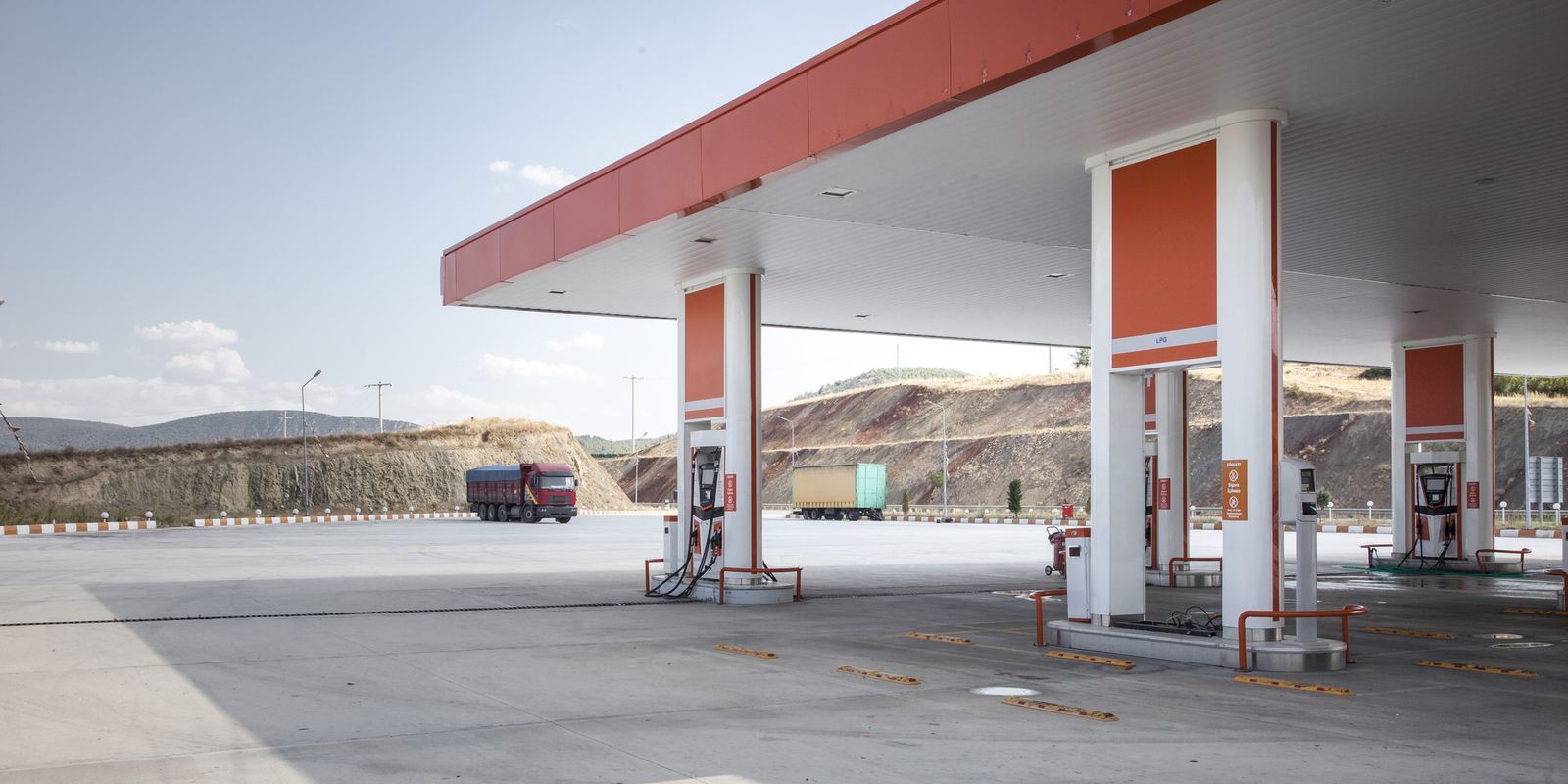
Nearly 60 years ago, a twist of fate detoured James "Jim" Haslam from a football coaching career into running filling stations. That detour sparked the rise of what is today the Pilot Flying J truck stop network, and along the way Haslam learned lessons about serving drivers that still hold up.
A Coaching Career That Never Happened
Born in 1930 in Detroit, in the heart of the Great Depression, Haslam grew up on football. He became a standout in high school in Florida and went on to play offensive lineman for the University of Tennessee, winning a national championship in 1951.
After a stint in the U.S. Army that included time in Korea following the 1953 armistice, Haslam returned to Tennessee and was offered a head coaching job at South Pittsburg High School. There was a catch.
"They offered me the job in February but they said they wouldn't start paying me until the football season began that fall," he said. "I had a one-year-old son at the time so I said no to that."
Instead, Haslam joined a Tennessee-based oil company and eventually took over a chain of filling stations. The desire to be his own boss ran deep, so he left to start Pilot Oil Corp. in 1958, buying his first filling station in Gate City, Virginia, for $6,000, a station with four fuel pumps that also sold cigarettes and soft drinks.
Building A Network
A three-year non-compete kept Pilot out of Haslam's native Tennessee, so he focused on Virginia and Kentucky, spending days driving around cities analyzing traffic patterns to find the optimal spots for new stations.
By 1965, after growing Pilot to 12 stations, Haslam sold a 50% stake to Marathon Oil, gaining a consistent fuel supply and capital for expansion, including adding convenience stores to the locations.
It was in the 1980s that serving diesel to truckers became a core piece of the business. After visiting a friend running a "travel center" for commercial trucks, Haslam opened a similarly styled facility under the Pilot name and added Pilot's convenience-store know-how.
"We lucked out in a way," Haslam recalled. "We found we got a lot of business by putting in diesel pumps. So we decided to build a coast-to-coast network of travel centers, largely by acquiring other truck stops."
A series of acquisitions followed, and in 2010 Pilot merged with truck-stop chain Flying J to form Pilot Flying J, a company that grew to operate hundreds of locations across the U.S. and Canada, employing tens of thousands of people and serving more than a million guests a day.
"Trucking moves the U.S. economy; without trucks, where would you be?" Haslam said. "Trucking is still made up of mostly small businesses. It's not dominated by just a few large companies. The people running them are hard-working and successful and we love serving them."
What He Learned About Growing A Business
Haslam credits two ingredients for successful growth, and admits he learned the hard way that money alone isn't enough.
"You need financial capital and intelligence capital to really grow successfully, and the mistake I made for a time is that I acquired too much money to build. The biggest challenge is finding good people."
His through-line, drawn from his football days: build a game plan and stick with it. "The economy goes up and down, but you can't run a business just based on one bad week or one bad month."
Lessons For Anyone Serving Drivers
Over nearly six decades, Haslam distilled his approach to truck-stop operations into a handful of lessons that apply to any business built around drivers:
- Like the people you serve. "To be successful in this business, you have to like people and especially like dealing with truck drivers. They spend a lot of time alone, so when they stop to buy fuel or get something to eat, they want to talk. You need to understand them, their work schedules, and their needs."
- You're in the hospitality business. "We're not really selling diesel, food, or truck repair services; we're really in the hospitality business. Our guests will buy those things if they feel welcomed, if the restroom is clean, if the yard is neat, if the food was good."
- Get managers in front of drivers. "We try to get all of our new managers out to the fuel island to talk to drivers about what they like and don't like, and why they will or will not come back."
- Respect the driver's clock. A driver once told Haslam, "You are all so busy, I have to wait a lot." The lesson: waiting means drivers go elsewhere. Make fuel islands and stores as efficient as possible.
- Take care of the whole truck. "Taking care of the customer extends to taking care of their trucks. We need to be able to handle almost all of a driver's needs when they stop."
- Lean into technology. Haslam saw apps that push drivers what they need before they arrive, a shower reservation, a parking spot, a food order, as the future of the stop.
And as for that long-ago coaching job he turned down? He has few regrets. "When you're 86 like me, you rarely get to coach football teams anymore," he laughed. "That's not true in the business world."
Source: FleetOwner
Move freight smarter with Doft
Thousands of loads, instant matching, and fast carrier pay — all in one place.
Sign up free