
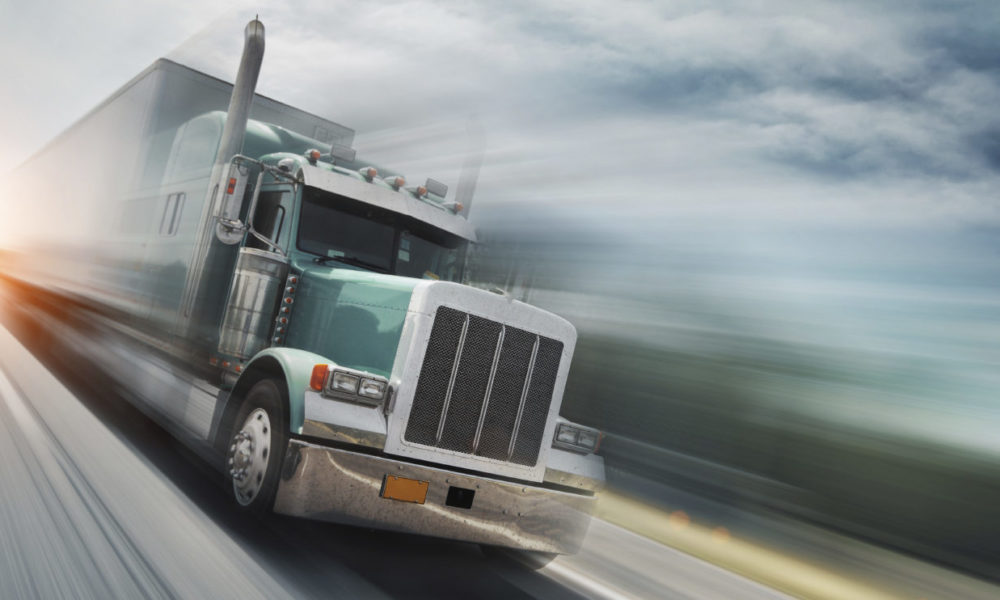
Driverless delivery vehicles are widely seen as part of the future of trucking. The bigger question for carriers and owner-operators is what the industry should be doing now to stay competitive through that transition.
The U.S. trucking industry is valued at hundreds of billions of dollars annually, and as autonomous and driverless delivery technology matures, companies that move freight will need to adapt rather than stand still.
To explore how the industry is responding, Doft CEO Dmitri Fedorchenko shared his perspective. Doft connects shippers directly with truckers in their area, and the question was simple: how does a freight-matching platform respond to the rise of driverless delivery vehicles?
His answer reframed the issue. Instead of treating automation as a threat, he argued the technology and freight-matching are complementary.
"I'm sure that we're not competitors with self-driving truck manufacturers but partners. I'm highly convinced that self-driving truck makers will integrate freight-matching into their on-board systems, making their trucks not only autonomous but smart and profitable."
Drivers aren't disappearing
With roughly 1.7 million Americans working in trucking, the move toward driverless trucks has raised real concerns about job losses. But Fedorchenko noted that driverless trucks will be most efficient on long hauls, while city driving and door-to-door deliveries will still require human operators.
"Think of driverless trucks as robots following your orders. There'll always be an operator somewhere around to help trucks maneuver in the city. On highways these robots will work as autopilots like in airplanes. But trucks are useless when they don't have jobs to do and freight to move. We target owner-operators and independent drivers who need a marketplace where they can easily find loads."
Adapting beats resisting
Whether jobs are lost or gained, deliveries and shipments will always be in demand. The deciding factor is how well companies adapt to changing times. According to Supply Chain Digest, driverless delivery vehicles may not end jobs at all, but instead create new opportunities for local deliveries, customer service, and sales roles while autonomous vehicles handle the heavy lifting.
For Doft, the goal is practical: turn smartphones and trucks into a working tool that earns money for their owners while making transportation safer, more reliable, and more efficient.
"We are solving real problems for small businesses and independent truckers. Every dollar spent on logistics is added to the final price of the product."
As major shippers experiment with rolling robot couriers and last-mile automation, the pace of change is only accelerating. The takeaway for carriers is clear: the operators who treat new technology as a tool to find more loads and run fewer empty miles will be the ones who come out ahead.
This article is based on a feature originally published by The Sociable.
Move freight smarter with Doft
Thousands of loads, instant matching, and fast carrier pay — all in one place.
Sign up free