
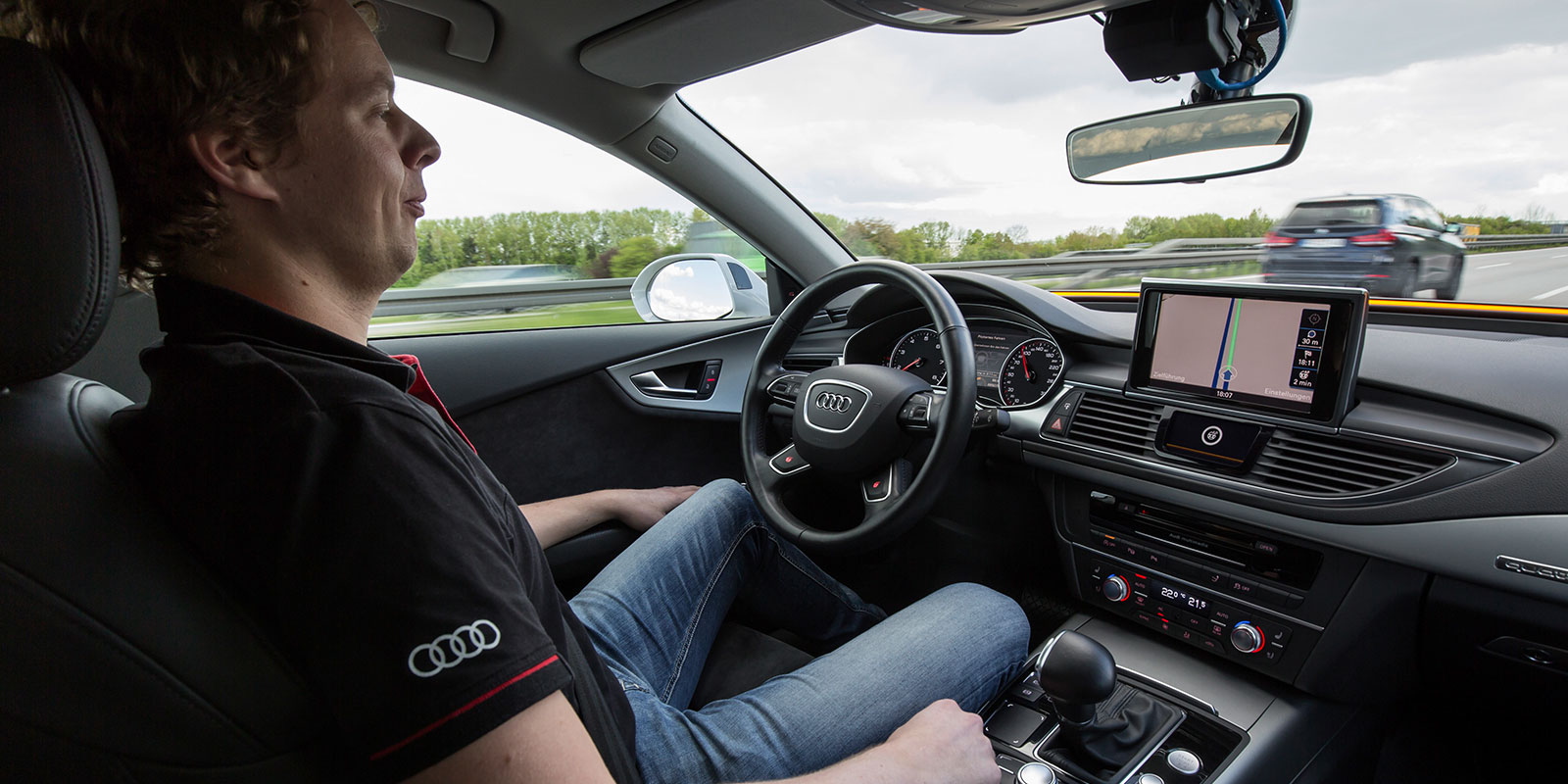
Driving jobs may change, and society will need to cope.
There are roughly 3.5 million truck drivers in the United States, and when you add cab and ride-sharing workers, the number climbs toward 4 million, just over 1 percent of the country's population. In the UK there are hundreds of thousands more truck and cab drivers. As driverless vehicles slowly move from concept toward reality, every one of those jobs faces long-term questions, and how society handles the transition matters.
We've been here before
This isn't the first time automation has reshaped work. Autonomous transport systems already run around the world, from Paris Metro lines to the Las Vegas Monorail. And ever since the industrial revolution, machines have let us do more with fewer people.
In agriculture, tractors let one person replace a whole team tilling soil. Weaving machinery put thousands of textile workers out of work and gave rise to the Luddite movement that opposed the machines. Yet today you'd be hard pressed to find those displaced farm hands or weavers. So what happened?
Where the money goes
What happened is that the money got spent elsewhere. Jobs disappeared, but the wages didn't vanish. A factory that can produce ten workers' worth of output with one worker now has the equivalent of nine salaries to spend on something else. Entire industries emerged as a result, jobs we couldn't have dreamed of before. In theory, professional drivers should likewise find a new generation of work.
Why it isn't that simple
If only it were that easy. People can't change careers at the drop of a hat. Professional drivers often train for years and grow more skilled every day on the road. Handling a heavy truck safely is a genuine, specialized skill, and the concern is what happens to that skill in a more automated future.
In the long run, the labor market should adjust as it always has. But the real challenge is education. Schools and universities will need to step up to prepare people for a world where more routine tasks are automated.
Society's biggest challenge
Today, someone who struggles in school still has paths into skilled work that doesn't require academic credentials, including many driving jobs. They demand real skill, just not the academic kind. If those entry points shrink, the safety net of jobs that don't require degrees gets thinner, and schools have a much bigger job preparing people to thrive without them.
History offers some comfort. Nobody mourns the lamplighters replaced by electric streetlights, or the switchboard operators replaced by automatic exchanges. New work has always followed. But the transition is never automatic, and for today's professional drivers, the smart move is to keep building skills, including the technology skills that will matter as the cab itself becomes more advanced.
Move freight smarter with Doft
Thousands of loads, instant matching, and fast carrier pay — all in one place.
Sign up free