
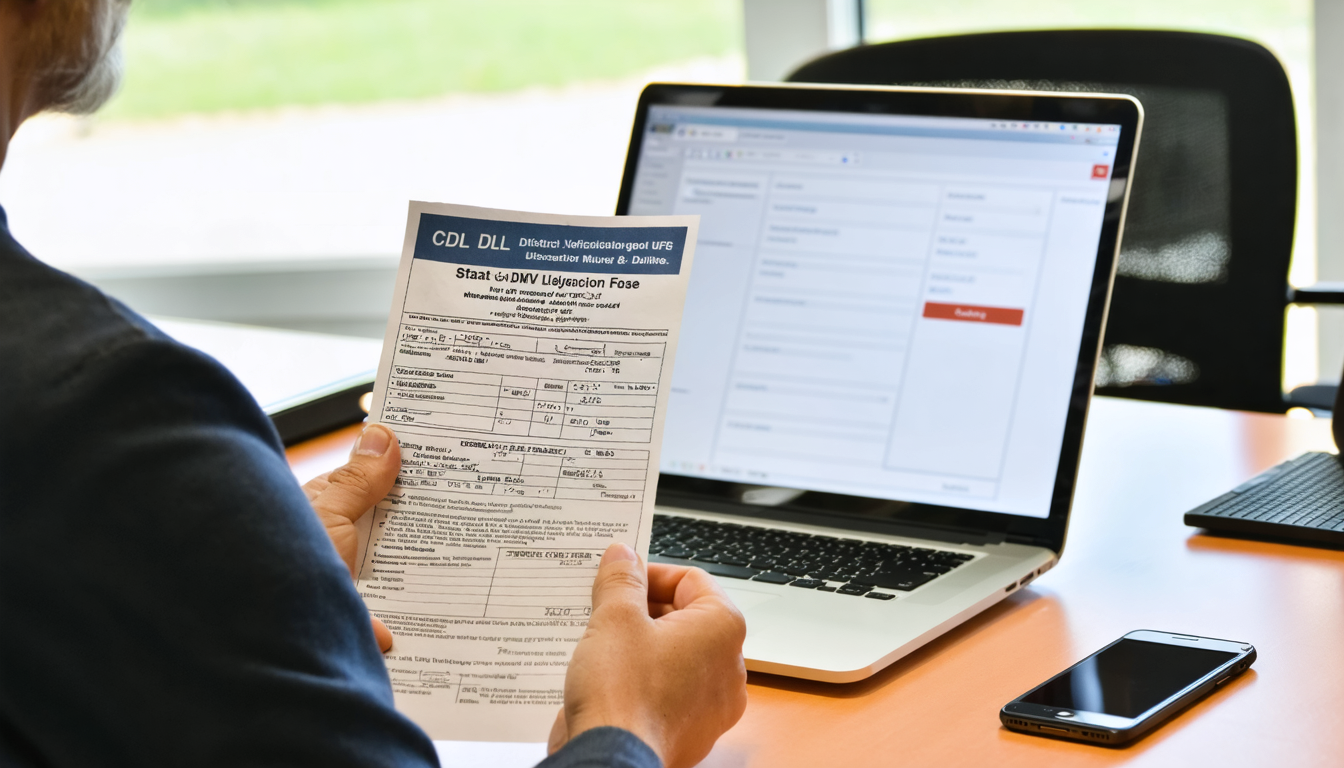
The Department of Homeland Security and FMCSA just announced a coordinated crackdown on fraud in CDL schools—a move that signals serious concern about fake credentials flooding the driver market. For owner-operators and small-fleet owners, this is both a warning and an opportunity: the industry is tightening standards, which means hiring practices are about to shift, and you need to know how to protect yourself.
Why This Matters Right Now
Fraudulent CDL schools have been issuing licenses to drivers who never completed proper training or passed legitimate tests. These unlicensed or undertrained drivers create liability nightmares: safety incidents, DOT violations, failed audits, and insurance claims. When a driver with a fake or compromised CDL gets into an accident or violates HOS rules, the liability can trace back to the carrier or owner-op who hired them. DHS involvement signals this is now a national security and compliance priority, not just an industry whisper.
For fleets already struggling with driver shortages and tight margins, the crackdown means the driver pool is about to shrink—but the quality will improve. Legitimate training programs will be easier to identify. Fraudulent ones will face federal penalties. This creates short-term hiring friction but long-term protection.
How to Vet a New Driver's CDL
Start with the basics: verify the CDL directly with the state DMV, not just the driver's word or a printed license. Many states now offer online CDL verification portals. Check the issue date and endorsements (HazMat, tanker, doubles, passenger). If a driver claims five years of experience but the CDL was issued last year, dig deeper.
Ask for proof of training—a completion certificate from a registered CDL school, not a generic letter. Legitimate schools are accredited by their state transportation department. Call the school directly and confirm the driver attended. Fraudulent operations often disappear or refuse verification calls.
Request a copy of the driver's training records or logbook from their previous employer, if applicable. A driver with legitimate experience should have a verifiable work history. Cross-check references with actual carrier dispatch records or load histories.
Red Flags in the Hiring Process
A driver who obtained their CDL in an unusually short timeframe—say, two weeks—should raise questions. Legitimate training typically takes 4–8 weeks. If they can't name their training school or give vague answers, walk away.
Watch for drivers who obtained CDLs in states known for lax oversight. While not always a sign of fraud, it warrants extra scrutiny. Verify their medical certificate (DOT physical) with the National Registry of Certified Medical Examiners; fake medicals are also part of the fraud ecosystem.
If a driver has multiple CDLs from different states, that's a red flag. You can only legally hold one CDL. If they claim they're "switching states," verify the surrender of the old license with that state's DMV.
What the FMCSA Crackdown Means for Your Insurance and Audits
Carriers and owner-ops are increasingly liable if they hire drivers with fraudulent credentials. Insurance companies are tightening their underwriting and may deny claims if you can't prove you conducted reasonable due diligence on hiring. FMCSA audits now routinely check driver file documentation—including CDL verification, training records, and medical certificates.
Keep a paper trail: document every verification you performed, including dates, who you contacted, and what you confirmed. If you use a third-party background check service, ensure they verify CDLs directly with state DMVs, not just pull public records. Some services cut corners; ask them explicitly how they verify CDL legitimacy.
Practical Next Steps
If you're hiring now, add CDL verification to your standard onboarding checklist. Many owner-ops and small fleets skip this step because it takes time; don't. A 15-minute phone call to a state DMV can save you from a compliance violation or an accident liability claim.
If you already have drivers on your roster, spot-check their CDLs against state records. You don't need to audit everyone, but a random sample—especially for newer hires—is smart risk management.
Consider using a carrier services platform (like Doft, which vets carrier credentials as part of load matching) to reduce exposure to fraudulent carriers and, by extension, drivers. The more verification happens upstream, the safer the freight ecosystem becomes.
The Bottom Line
The DHS-FMCSA partnership is a sign that the industry is finally taking CDL fraud seriously. For you, that means the hiring landscape is shifting: fewer fraudulent credentials in circulation, but also tighter compliance expectations. Start verifying now, document everything, and treat CDL verification as non-negotiable. It's not just compliance—it's protecting your business, your insurance, and the safety of everyone on the road.
Move freight smarter with Doft
Thousands of loads, instant matching, and fast carrier pay — all in one place.
Sign up free